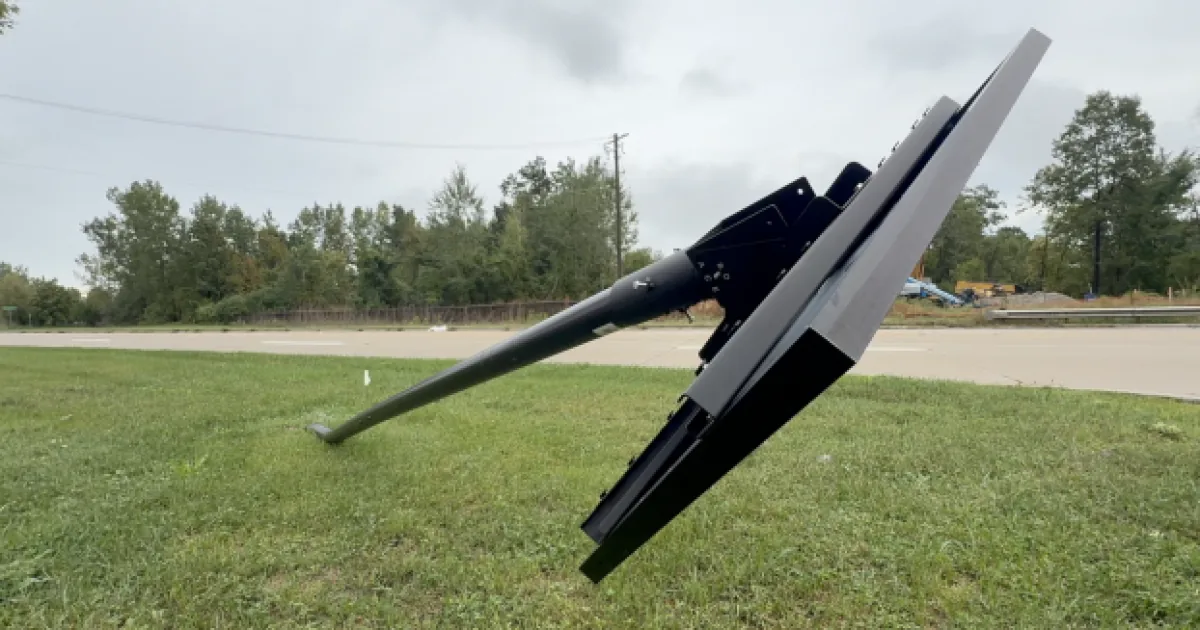
WEST BLOOMFIELD TOWNSHIP, MI — West Bloomfield police say they are seeing more vandalism aimed at Flock cameras this summer, joining a broader pattern of camera damage across metro Detroit. In Livingston County, six cameras were recently destroyed and about 25 were temporarily removed, according to police.
In West Bloomfield alone, Deputy Chief Brian Tash said several incidents have taken place over the summer. One involved a driver who ran over a camera near Haggerty and Westwin Lake before fleeing. In another, police say someone cut a pole in half near Walnut Lake and Inkster and stole the camera.
Police say the cameras have been damaged before at the same locations
The vandalism near Walnut Lake and Inkster was not the first time that location had been targeted. Detective Philip Beasley said a prior incident there dates back to June 2024.
Beasley described video from that earlier case showing a person using what appeared to be a paint roller to cover a Flock camera with paint. Police did not say whether anyone has been charged in that incident or in the newer cases.
The repeated damage has made the cameras a visible flashpoint in the township, where police say the problem is now part of a larger regional trend rather than an isolated act. The department says the destruction is happening as public attention around surveillance tools continues to grow.
Deputy chief says Flock systems gather only license plate data
Tash said the system is limited in what it records. He said Flock cameras read license plates and do not give officers personal details such as who is driving, where someone lives or a birthday.
“It shows the license plate information only,” Tash said. He said that limited scope is why police view the cameras as a helpful investigative tool rather than a broad intrusion into private life.
According to Tash, the department is not trying to monitor residents’ day-to-day routines. Instead, police see the cameras as a way to identify vehicles connected to specific incidents and leads. He said the system is designed to provide information relevant to investigations, not personal profiles.
Police say the cameras have helped in serious investigations
Tash said Flock cameras have already played a role in solving or advancing a range of cases. He said they have helped police look into home invasions and hit-and-run crashes.
He also said the system recently helped officers locate a missing person from the Nevada area who was later found in Michigan. For police, that kind of use shows the cameras can have value beyond property crime and traffic investigations.
“They’re actually a valuable tool and we’re not looking to get into anyone’s private lives,” Tash said. The department has used that point to argue that the readers can help officers move faster when a case depends on finding a vehicle.
Residents are split between safety concerns and privacy objections
People in West Bloomfield have not reached a consensus on the cameras. Some residents say they are comfortable with the devices and believe they may help protect the community.
“I feel like they’re possibly there to protect people,” resident Lindsay Waldman said. Another resident, Jack Hotz, said, “I’m perfectly fine with the Flock cameras.”
Others are far more skeptical. Sean Lavine called the system “a mass surveillance system” and said he believes it is “illegal, unconstitutional, and un-American.” The disagreement reflects the broader tension surrounding automated license plate readers, where support often rises and falls with personal views on privacy and public safety.
Even critics of the cameras say vandalism is not the answer
Lavine said damaging the cameras is not the right response, even though he opposes them. He said people upset about Flock should focus their energy on local government rather than on destruction.
“I don’t think that’s the most productive use,” Lavine said. He urged opponents to take part in the local political system instead of targeting the equipment itself.
Tash made a similar point, saying residents can voice concerns at Town Hall meetings. “That’s the way of going about doing it,” he said. For police, the challenge is now twofold: protecting the cameras from damage while also responding to an argument over how much surveillance is acceptable in a suburban community.
Local stories that matter, from GHS The Student.